
VillageFXB
The method
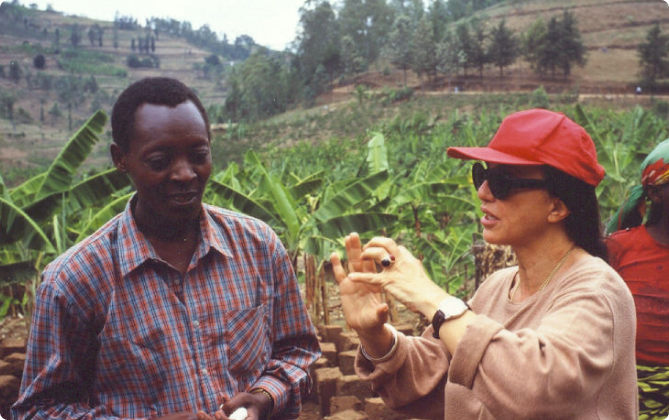
By Albina du Boisrouvray
" To understand the revolution that the FXB method was, we must return to its origins. It all started in 1991, when I decided to export to Africa the program I had already built in the United States. "
Its posterity
Over the years, our method has been taken over by major institutions such as the World Bank and important organisations such as the Ford Foundation or Brac World. It is regrettable that sometimes some forget the origins of this revolution and try to grant credit for it, but we are very proud and very happy for the beneficiaries. Because it is the symbol that FXB has fulfilled its role as a small, innovative and pioneering NGO: inventing exemplary local programs that were then taken over by other organizations around the world.
A comprehensive solution to extreme poverty
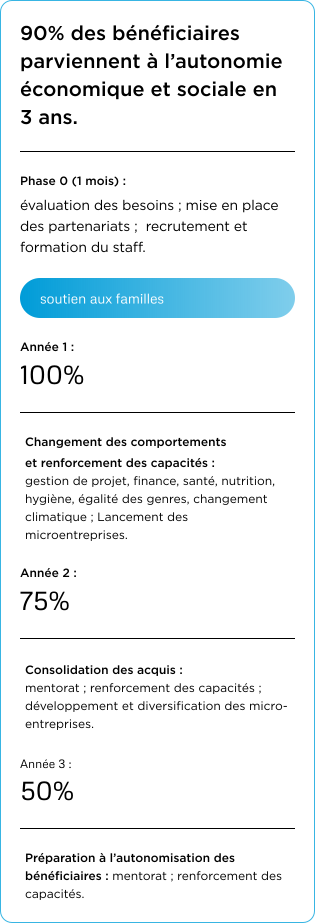
Families participating in a VillageFXB project receive declining support for three years: the time it takes to move from extreme poverty to sustainable economic and social autonomy.
After receiving training in financial management and entrepreneurship, they receive the necessary resources to launch income-generating activities (micro-enterprises) and actively engage in Save and Credit Village Associations (AVEC).
This will gradually provide families with sufficient income to meet their daily needs, protect and raise their children, and continue to thrive after the end of the program.
At the same time, families are accompanied in access to their fundamental rights, not leastIn addition, the European Commission has set up a European Centre for the Improvement of Living and Working Conditions. This support also aims to strengthen their resilience to climate change. Moreover, they acquire essential skills in health, hygiene and social matters, contributing to their well-being and ensuring lasting impacts on their quality of life.
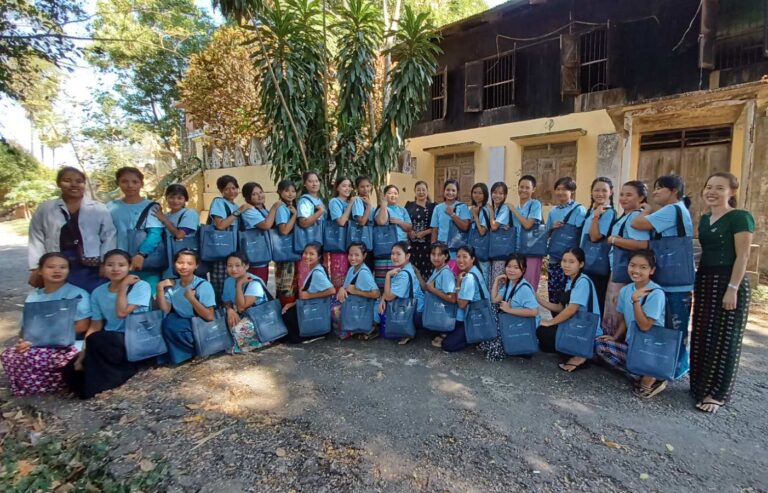
Because women play a key role in the development of their communities, FXB sets up specific activities to strengthen their skills, promote their access to sustainable economic opportunities and enhance their role as actors of change within their families, as well as in their communities.
Our current VillageFXB
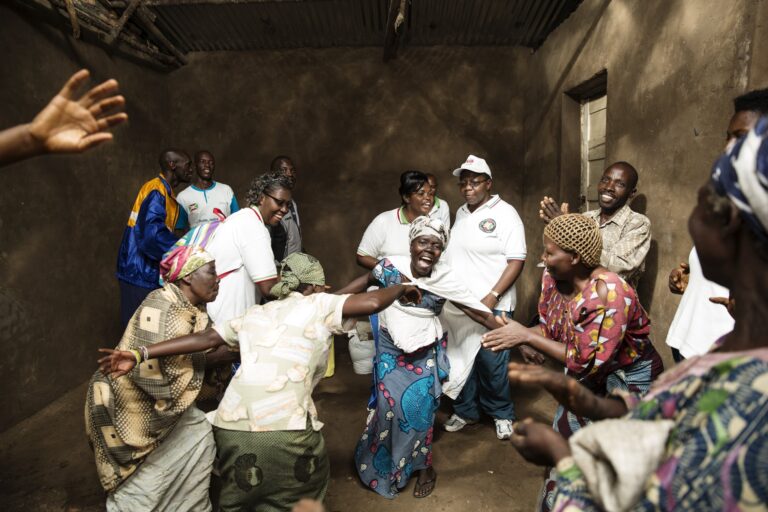
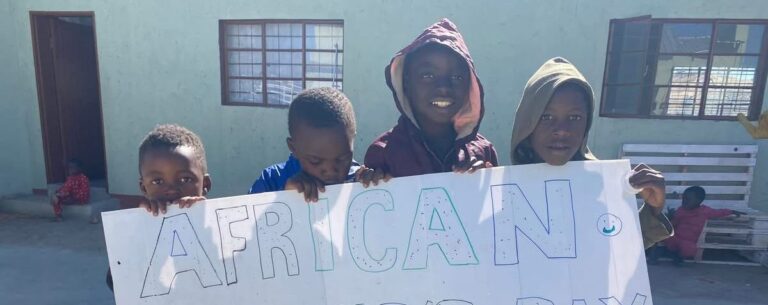
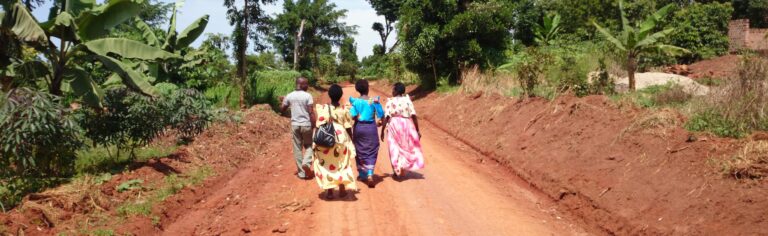
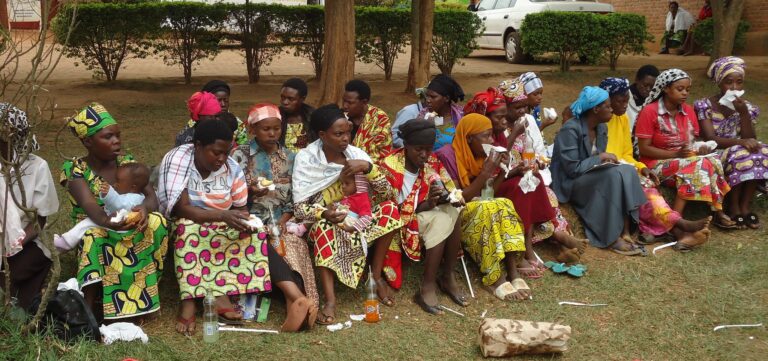
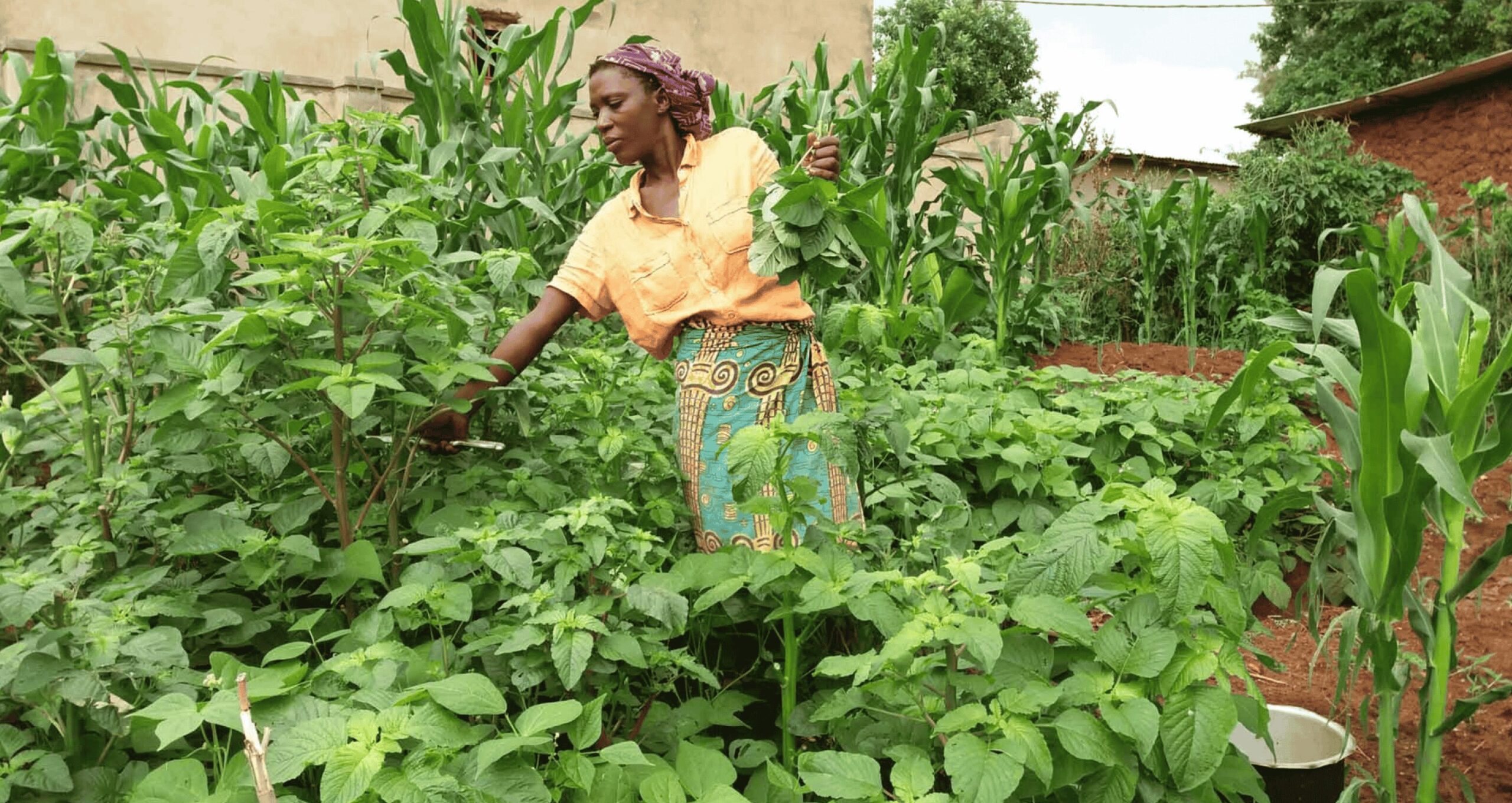
Currently, we are running VillageFXB programs in Uganda, Burundi, Rwanda and Namibia.
Principles of development:
Among the most powerless groups in society, children are very vulnerable to the multifaceted effects of poverty on families and communities. Income insecurity, hunger, poor health, marginalization, illiteracy, lack of sanitation and housing are the causes and consequences of poverty that combine to lead families into a downward spiral of deprivation.
Poverty experienced by children, even over short periods, can affect the rest of their lives. In the worst case scenario, children die. If they survive, malnutrition, insecurity and deprivation in early childhood can have life-long health and cognition consequences that undermine the potential of adults and endanger the well-being of future generations.
Recognizing the crucial importance of breaking this cycle of poverty, FXB focuses its energies on combating the root causes of poverty as it is the most effective way to guarantee the rights of children to survive, grow and develop.
Six basic principles underpin the VillageFXB development approach:
Realizing and protecting the rights of forgotten children
Realizing and protecting the rights of forgotten children: the most widely ratified international human rights treaty in history, the International Convention on the Rights of the Child (CIDE) establishes the civil, political, cultural, social and economic rights of children.
Recognizing the inherent vulnerability of children, it places particular emphasis on the primary responsibility of the family for care and protection.
FXB was created to implement the articles of the Convention, initially targeting children orphaned and infected with HIV/AIDS, and then expanding to families and children affected by multiple causes of vulnerability, including conflict, poverty and disease.
As the Convention specifies, special attention has been paid to the family, as it represents a fundamental unit of income generation, care, education and the main means by which children can access their rights. By building its development programmes around the family and community, FXB seeks to strengthen the capacity of families and communities to realize children's rights to protection.
Prioritize and support families
Prioritizing and Supporting Families: FXB recognizes the crucial importance of families in promoting the well-being of children.
Beyond physical needs, each child needs affection, protection and care from caregivers to promote social, cognitive and emotional development. A well-established set of research shows that supportive family environments are associated with higher enrolment rates and higher school performance, increased self-confidence and self-esteem, and reduced problems of violence and behaviour.
But the basic material needs of children must be met so that family care and affection can bear fruit. The cumulative effects of endemic poverty, food insecurity and HIV/AIDS limit the physical capacity of family and community networks to provide children with the care they need to develop, learn and thrive.
FXB addresses these material constraints by strengthening the economic capacity of families and supporting family investment in child development and education.
Take advantage of local expertise
FXB recognizes the values, skills and networks that define the communities in which it works. From the early stages, FXB seeks to identify and leverage this local expertise, with the aim of strengthening community ownership and social ties.
By involving the community in the design and implementation of activities and establishing links with other local active organizations, FXB ensures that its programs meet the real needs of families who support children and do not duplicate what is already provided.
Programme activities take into account the particular cultural, political and economic context of people in need and encourage the participation of those without a voice or social status.
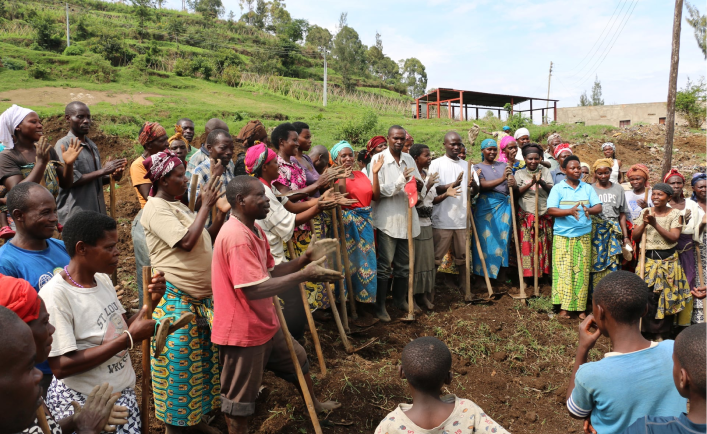
Strengthening the capacity and capacity to act of beneficiaries
FXB programs are designed to build the capacity of families and communities to enforce children's rights. Defended by Professor Amartya Sen, Nobel Prize laureate in economics in 1988, the capacity-building approach (« Capabilities ») enhances people's ability to be healthy and participate in economic, social and political life.
According to this approach, poverty is considered a deprivation of capacity, not just a lack of income. The objective of development is therefore not simply to achieve a set of improved economic or social outcomes (income, social status, etc.), but rather to develop the capacities that make them feasible.
FXB programs encourage families and communities to develop their capacities and enforce children's right to protection and care.
In addition to providing education and psychosocial support, specific efforts are being made to strengthen family capacity for self-sufficiency, such as the ability to generate income, and to plan and manage resources to meet the health, nutritional and educational needs of household members.
Because women play a key role in the development of their communities, FXB sets up specific activities to strengthen their skills, promote their access to sustainable economic opportunities and enhance their role as actors of change, including by encouraging their active participation in decision-making within their families and communities.
At the community level, FXB strives to support inclusive community networks with the values, skills and tools needed to meet the needs of children and other vulnerable members of society.
By working simultaneously at the family and community levels and integrating health, education, economic development and human rights concerns into all aspects of FXB's work, FXB fosters synergies that strengthen and diversify family capacities to ensure the well-being of children.
Continuous learning and adapting our approach to diverse community issues
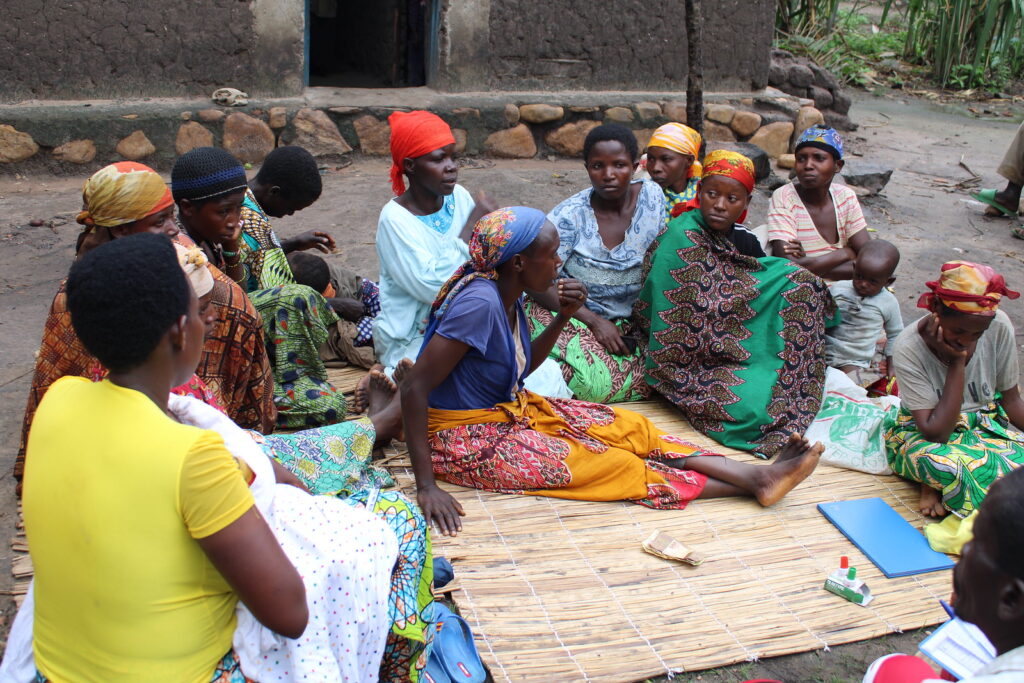
As a learning organization, FXB actively seeks to challenge and refine its programs based on evidence, and critically review its practices against the fundamental principles of rights, equity and social justice.
FXB also integrates resilience and adaptation to the impacts of climate change into its activities, ensuring that marginalized communities are prepared to address the environmental challenges that disproportionately affect them.
In particular, it seeks to generate and implement local and effective solutions.
Restoring human dignity
Restoring human dignity is a central objective of the development approach. FXB promotes the development of capabilities that are the basis for renewed dignity and well-being.
Furthermore, promoting women's justice and economic rights and reducing gender disparities are essential to achieving the 2030 Agenda for Sustainable Development and the Sustainable Development Goals. To meet these goals, FXB has been working for 35 years to defend the rights of women and children, and to prevent all forms of violence and insecurity against them.
It also aims to raise community awareness of domestic and sexual violence and gender equality. This awareness is essential to prevent such violence, support victims and promote egalitarian relations. It helps deconstruct gender stereotypes and create social norms that reject violence, thereby fostering safer and more inclusive environments.